Tuesday, April 26, 2005

Getting a Classy Portrait…even if you are an Amateur

Amateur photography is one of the most wonderful venues for expression in the world. Sometimes the more amateur the photographer, the more real to life the photo may be. If you are a family member of the photo’s subject, then it may lend it a more personal air as well. However, amateur photographers can become discouraged with their technique, equipment, and the products they produce. I would like to lay out a few easy techniques that will help to make for a more energized look to your work.

Portraiture 101-

1. Placement-
Working with a ‘live’ subject can sometimes be one of the most challenging moments in photography, and yet one of the most rewarding.
If you know your subject well, you can place them in a situation that is conducive to their personality. (i.e.- If you have a prissy girl, don’t put her in the barn for her portrait.).

2. Framing-
a. Carefully place your subject within your frame; don’t always center the person, try different places within your frame.
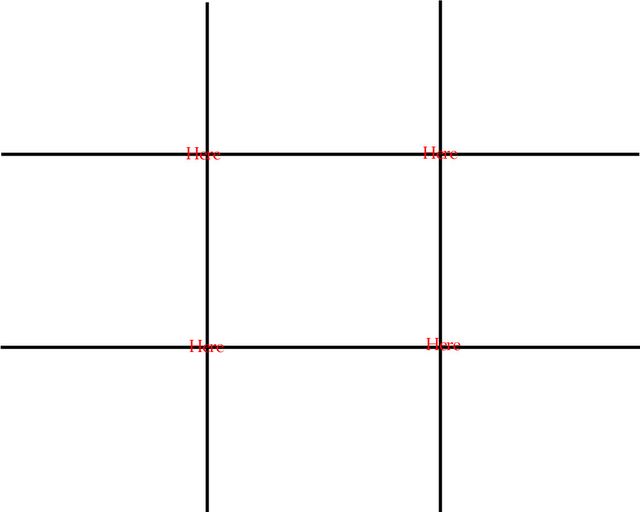
b. The Rule of Thirds: Split your photo into thirds with 2 vertical lines. Now take 2 more imaginary lines and divide your photo into thirds again but this time horizontally. Your lines should meet in 4 places. These 4 places are key points to place your main subject, or strong point within your frame. See diagram below.

Example #1- Rule of Thirds
Example #2 -Moon-Centered
Example #3 -Moon-Rule of Thirds
3. Style-
Try and have your model do something other than just stare at the camera.
a. Try picking flowers, or running their finger through sand.
b.Looking at the ground, or off into the distance.
c. Be creative and try different poses. Remember what may look odd
in real life, may be just the look for a photo!

Example #4 -Unique Posing
4. Lighting-
a. Lighting is very critical to a good photo.Pick mornings or evenings for outdoor portraits. Noontime sun can ruin a photo because of the overhead sun, which makes shadows. i.e. Eyes become black holes. See example below:

Example #5 -Overhead Light



b. Mornings vs. Evenings?
I personally prefer mornings since the sun, for the most part, will be coming up through the trees, which creates a diffusing factor. One must also be cautious of shadows as well. Evenings are good also, but remember that the intensity of the sun can sometimes be more difficult to work around depending on the setting.

c. If you have to shoot in the middle of the day, find shade for your subject.

d. Cloudy? Sunny? What do I do?
Most amateur photographers can get stuck on the thought of shooting on a sunny afternoon for that Kodak moment. Sunny does not always mean perfect, many times for the photographer sunny can be a major challenge. As I mentioned above, choose a time when the sun is not directly overhead. You don’t want a squinting model.

e. What about Cloudy days?
Cloudy is better…cloudy is EASIER! Yes, shooting on a cloudy/overcast day can be a great answer to some of your key lighting issues. For example, think about a studio light. They are not direct lights, but diffused lights enclosed in a soft box. Now look at the light you are using outdoors. A God-made soft box effect is created with the sun behind the clouds. Our Creator is wonderful, and cloudy days will now have a whole new meaning for you!

5. Don’t be Discouraged! –
Portraiture is something that requires not only good technique, but also creativity. Be sure to experiment a lot before taking a paid job. A good way to gain experience is through doing family members, or friends. Do a family for free, or have them pay for your expenses. The job might be free, but the experience you will gain will be priceless!


I hope that you found this article helpful. If you have any questions, feel free to ask. I am by no means an expert in this area, but can speak from some experience. If you have any other tips to add, feel free to leave a comment. Let me know your comments or questions.

God Bless,
Sarah DeLadurantey
Fringe Focus Editor/Contributor

Monday, April 18, 2005

Buying Equipment Online - Why Do It?

As you may have guessed, buying equipment online isn't an easy task. There are so many web sites, how do you pick which one to buy from? How do you know if you are getting a deal, or if you are getting scammed? Also, how can you know if what you are looking at is really what you want? I have been asked these questions many times, and though I am not an expert, I have had some very interesting experiences trying to get some digital equipment for less. So, much of the info that I will share will be geared more toward buying digital cameras. But, I hope you will also learn some tips about what to do and what not to do when buying equipment online.

~Know the competition.

When I first decided that I wanted to get a digital camera, I started keeping my eye out for digital cameras at places like Wal-Mart, Comp-USA, etc. When I started, a decent 2.1MP digital camera was looking like it would cost me about $350. So I gave up- not wanting to spend that much on a camera at the time. Suddenly the idea hit me to look online! It was then that I realized that the stores were way overpriced, and it was actually reasonable to think about getting a decent digital for only $250 - online! I then started shopping online and the adventure began!

~Find websites with info you can trust.

First of all, I realized that there are too many cameras out there (well, almost) :-), so I started shopping around and finding all the of the low-price digitals that matched my needs, and each time I came across one that looked good I would visit www.stevedigicams.com, or www.dpreview.com, where I could get a professional review about any camera that I wanted. www.stevedigicams.com is my favorite of the two. Steve's info is very practical, with lots of pictures and sample photos from each camera that he reviews. The other website, www.dpreview.com, seemed a little more technical to me, and less geared to the know-nothing individual. However, www.dpreview.com does have a large glossary of terms, which was very helpful for me since I was just starting out and didn't know anything.

~Be careful - check out the details!

The first camera that I came across that I really liked was the Sony DSC-P75, which was running around $500 at the time (out of my price range again, but not as far off as before). After looking around at different stores, I found one for only $350 at a little online store. So I decided to buy a few, and sell them on Ebay for a return capable of getting me one for myself. After placing the order, I received a call from the store asking me if I would like to buy a bunch of accessories for a very low additional cost. Throughout the course of the conversation, I found out that the camera was a European version. This meant that all the menus on the camera, the instructions, and the box would be in German! Even though I had to cancel the order, I had learned an important lesson. The lesson was that although online stores are cheaper, they are not always reputable, and great caution must be taken when buying online.
After this I found a few sites that really helped me know if an online company was a valid company. A few of them that were of help to me are: www.BizRate.com, www.Froogle.com, and www.Yahoo.com (under "shopping"). Each of these has huge listings of online stores with customer reviews.

~How about eBay?

After seeing that any well-rated online store was still out of my price range (although still lower than the brick-and-mortar stores) I went to eBay, where I found my first camera, an Olympus Camedia c2000z. It was a decent 2.1 MP digital camera without many of the frills that I considered useless at the time. I got it for $219 with extras, when it would have cost me $325 at a store, and around $260 at an online store.

~Inside "the Bay"...

Since then I have learned a few things about eBay. If you want to get a deal, you need to either: stay up late at night and bid, or search only the "Buy-It Now" items. This is because, although it may be possible to bid on an item and get deal on it, you are only getting it for the current going rate on eBay (and that amount will only go down). If however, you search the "Buy-It Now" items with the items sorted by Lowest Price First, you can sometimes find someone who is trying to get rid of their item quickly.
For example, let's say that you find a camera that you like which is usually costing $600 on eBay. So you search the But-It-Now listings, then after keeping an eye on these listings for a couple of days, someone lists one for only $500. Now you can buy it and not have to worry about not liking something on it, because if something isn't the way you like it, you can just go back to eBay and sell it for $600! As a personal example, I found a laptop for $700 Buy-It-Now, kept it for 6 months, and sold it for over $1000. I could give more examples, but this article is not about buying an selling, or about starting a business.
My point is, if you have enough money to get a camera that you think you like, and you know that you can sell it for at least the same amount that you bought it for, then get it and play with it. The worst that will happen is that you will learn a lot about the camera, and you will have to spend a few minutes typing an ad, and listing it on eBay. What is more likely to happen is that you will learn a lot and probably make a few dollars, to then put towards a nicer camera...

DISCLAIMER! I personally haven't had a problem buying used electronics on eBay, but remember that there is always the risk that used items will be just on the brink of breaking down! If you get the item and it works for a while and then breaks down, you are that much in the hole. Always take into consideration the possibility that most of the money you put toward a used item, could be going down the drain. Now, I'm not saying this to scare you out of eBay,however, there are firm believers against eBay for this reason only, and I don't want to ruin their day.

Now back to the story,

You get the point; if you do it enough you will get to use some really nice cameras, and make enough money to get the camera that you wanted in the first place. Now you are probably not going to make a lot of money doing this, but with a little time and effort, I have been able to use a wide variety of cameras, learn a lot, have a lot of fun, and make a little money in the process. Of course, there are scams on eBay also. But eBay and its feedback form provide both a way to see what others said about this seller, and it is also a tool to motivate the seller to do a good job selling (knowing that he could end up with a bad record if he doesn't). Some sellers have PayPal Buyer Protection available, which is good insurance also. So, a few things to check before you buy from someone on eBay would be:


  • What is their feedback history,
  • Do they take PayPal (I really like this secure and easy method of paying the seller)
  • Are they PayPal Verified (not required in my eyes, but this tells you that the seller has had over ten positively reviewed transactions through eBay and that his information is verified as valid),
  • Do they have PayPal Buyer Protection available (this means that PayPal will refund up to $500 if you find yourself involved with a fraudulent seller),
  • Do they have a set shipping charge (I learned to check this the hard way after I had to pay $94 for shipping once!),
  • Where are they located ( I will never again buy a high-dollar item from outside the country, I don't even want to tell that story!),
  • Are there pictures of the item.

~ A few closing tricks on eBay...

If all of these points come up positive, then have no fear. If not, then feel the deal out. If you are not sure that it is a safe buy, then ask questions about the item (even if you know the answers), this will help you feel out what the sellers motives are.

I often find that some of the worst ads have the best deals! Now, I'm not recommending that you look for bad ads, however, don't dismiss item, just be very cautious and communicate often with the seller. You may be pleasantly surprised at what happens!

One last tip, ask for a picture of a specific spot on the item (if you can do it without sounding cranky). If they respond with a close-up pictures of it then that means that they at least they have the advertised item. This puts the possibility that they may have used someone else's picture to advertise an item that they don't actually have, out of the question.

~In Closing...

What I have to say may sound more like a crash course on eBay, but to be honest with you, after getting used to the "eBay way" :-), I would much rather buy from some individual out there that I have never met and probably will never meet, instead of typing my credit card number into an online store. In re-cap:

  • The prices are astronomically less,
  • The buyer/seller can't take any more from you than you give him (due to PayPal's secure method of transferring funds),
  • eBay has done an excellent job of letting you know whether the seller is trustworthy or not.

So, next time you find yourself looking for a new camera, jump in and check out what the web has to offer! Chances are you'll find out that you will be able to afford far more online than you could have ever dreamed of getting from a brick-and-mortar store!

Any questions or comments? I'll be keeping my eye on the comments page!

~ Jonathan Erber

Would you like to read interviews from Marvelous Photo-bloggers??